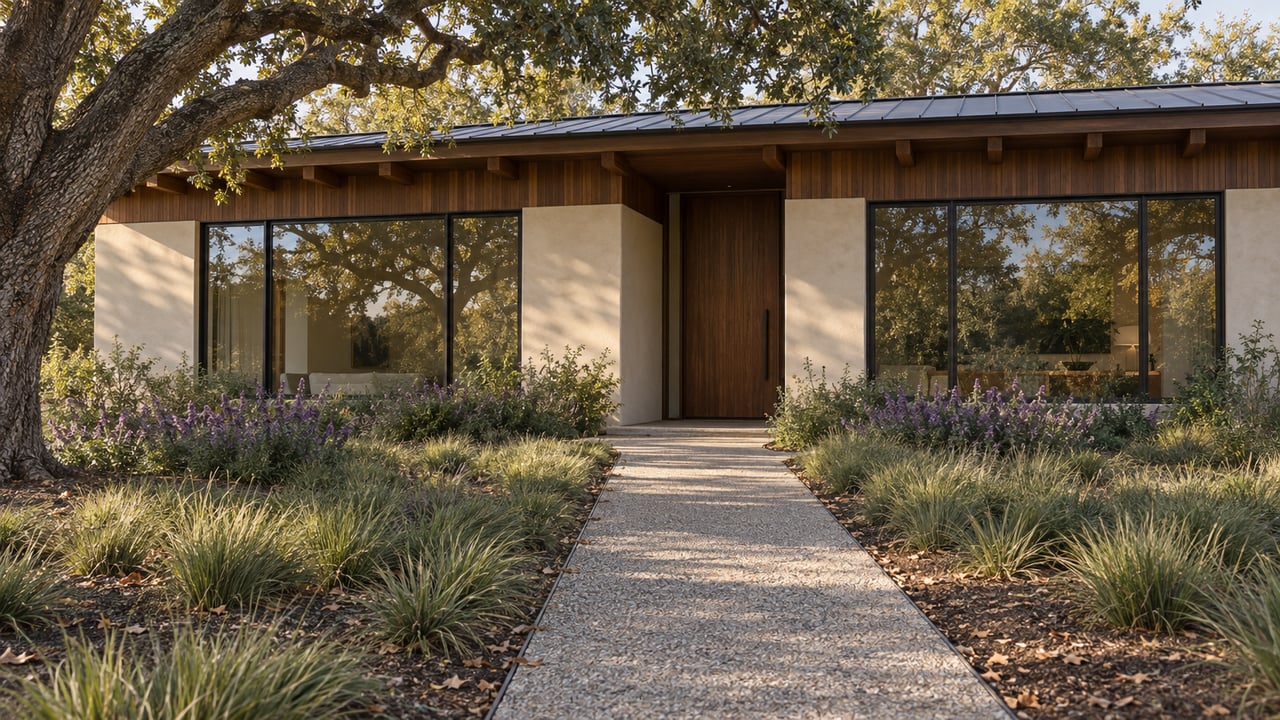
In Palo Alto, the Historic Plaque Doesn't Stop the Two-Story Next Door
October 1, 2026
October 1, 2026
Greenmeadow and Fairmeadow sit less than two miles apart, both built by Joseph Eichler during his Palo Alto expansion, both defined by the same post-and-beam construction, floor-to-ceiling glass, and low-slung profile that draws buyers to mid-century modern architecture. Ask a buyer touring either tract what protects that profile from a neighbor's future remodel, and most point to the same thing: the tract's Eichler pedigree. That answer is wrong in a way that matters.
Eichler Network reported that Greenmeadow and Green Gables became the first Eichler tracts listed on the National Register of Historic Places in 2005. That designation gets prominent placement in nearly every guide written about buying an Eichler since. Historic status is a form of recognition.
Green Gables makes the limits of that recognition plain. Gretchen's Wall reports that of the tract's original 63 homes, only 46 still retain enough of their 1950s character to count as historic contributors under the Register listing.
Residents in Greenmeadow have been specific about which one does the real work: it's the overlay, not the Register plaque, that they credit with keeping two-story construction out of the neighborhood.
Eichler Network reported that other Eichler tracts have filed for the same overlay over the years, including Los Arboles, Greer Park North, and Royal Manor, with residents in Faircourt inquiring about the same path. Fairmeadow tried and did not get there.
Eichler Network reported that in 2009 the city surveyed Fairmeadow residents to gauge support for a tract-wide ban on second stories and quoted resident Anne Knight, who helped lead the push, calling the results "disappointing." The petition stalled in 2010 without the neighborhood consensus the city required, and Knight came to believe the mistake was seeking the overlay for the whole tract rather than a limited section of it.
The consequence surfaced nine years later. In 2019, Palo Alto approved the first full Eichler teardown since adopting its voluntary Eichler Neighborhood Design Guidelines the year before, on a Fairmeadow lot at 3743 Redwood Circle. The city's chief planning official at the time noted that the guidelines did not apply to the project because it had been initiated before their adoption, and that the guidelines carry no enforcement weight regardless of timing, since no neighborhood has petitioned to make them mandatory. Immediate neighbors raised concerns about privacy, not building height, because the tract's character in that section had already shifted enough that a two-story addition was no longer the central issue.
Fairmeadow still carries the design cachet that draws buyers to Eichler tracts generally, including the circular street plan that put it on the cover of Fortune's 25th anniversary issue in 1955.
A buyer comparing an Eichler in Greenmeadow to a similarly priced one in Fairmeadow is not comparing two versions of the same protection.
That citywide review is not static. Custom Home says two-story projects trigger either the city's Objective Design Standards, adopted in February 2025, or the discretionary Individual Review process. Standard R-1 zoning caps building height between 17 and 30 feet depending on the subzone, and floor area ratio slides from 45 percent on smaller lots down to 40 percent on lots of 10,000 square feet or more. None of that changes based on whether the home next door happens to be an Eichler, and Eichlers account for roughly 2,700 of the city's single-family housing stock, scattered across tracts with very different levels of protection.
The timeline matters for anyone planning a remodel rather than defending against one. Plan check for a residential addition typically runs 8 to 16 weeks, with new construction closer to 16 to 24 weeks, and Individual Review adds another 4 to 8 weeks on top of that. Expedited processing is available and can shave roughly a quarter off the review time.
The stakes are not shrinking. Palo Alto's median sale price for single-family homes ran $4.1 million from January through August 2026, up 7.8 percent from $3.8 million over the same period in 2025, according to sales data reported by the Redwood City Pulse. Green Gables was among the neighborhoods where new listings declined during that stretch even as prices held. Scarcity in a tract that already carries both historic status and overlay zoning compounds the value of that protection rather than diluting it.
Two other details tend to catch Eichler buyers off guard well after they have settled on a tract.
The first is radiant heat. Original Eichler slabs carry copper or steel hydronic piping poured directly into the concrete, and a general home inspector is not equipped to evaluate that system. The work belongs to hydronic heating contractors, and a separate inspection from that specialty is standard advice for anyone buying or selling one of these homes. Some insurance carriers have also started excluding radiant panel leaks from coverage entirely, which is worth a call to your insurance agent before waiving an inspection contingency, not after.
The second is permit history. Eichlers have been remodeled and expanded for seventy years, and the additions that create problems at closing are almost always the ones that never went through the city. Unpermitted alterations to the post-and-beam structural system, or an atrium enclosed without proper structural support, are among the most common defects found in these homes. The complications are not cosmetic. They surface as title questions, insurance friction, and lenders who require additional inspections or repairs once they spot evidence of unpermitted electrical, plumbing, or structural work.
Does National Register status add resale value on its own? It adds recognition, and for some buyers a design pedigree they are willing to pay for. It does not guarantee the home next door will stay one story.
Can a tract without an overlay still get one? Yes, through the same petition process other Eichler neighborhoods have used, though it requires substantial neighborhood agreement. Fairmeadow's 2010 attempt shows how that consensus can fall short.
What happens if a seller can't produce permit records for an addition? Lenders who find evidence of unpermitted work often require added inspections or repairs before funding, and the same gap tends to resurface at resale.
Comparing two Eichler listings on price alone leaves out the zoning question that actually determines what your view looks like in ten years. If you're weighing a purchase, a remodel, or a sale in one of Palo Alto's Eichler tracts, Bob Kamangar can help you confirm what's recorded, what's enforceable, and what still needs a permit before you write the offer.
This article is general information, not legal, tax or financial advice. Consult a qualified professional about your situation.
Stay up to date on the latest real estate trends.
Rooted in trust, expertise, and sincere dedication, Bob brings a lifelong appreciation of what “home” means to every client and every move.