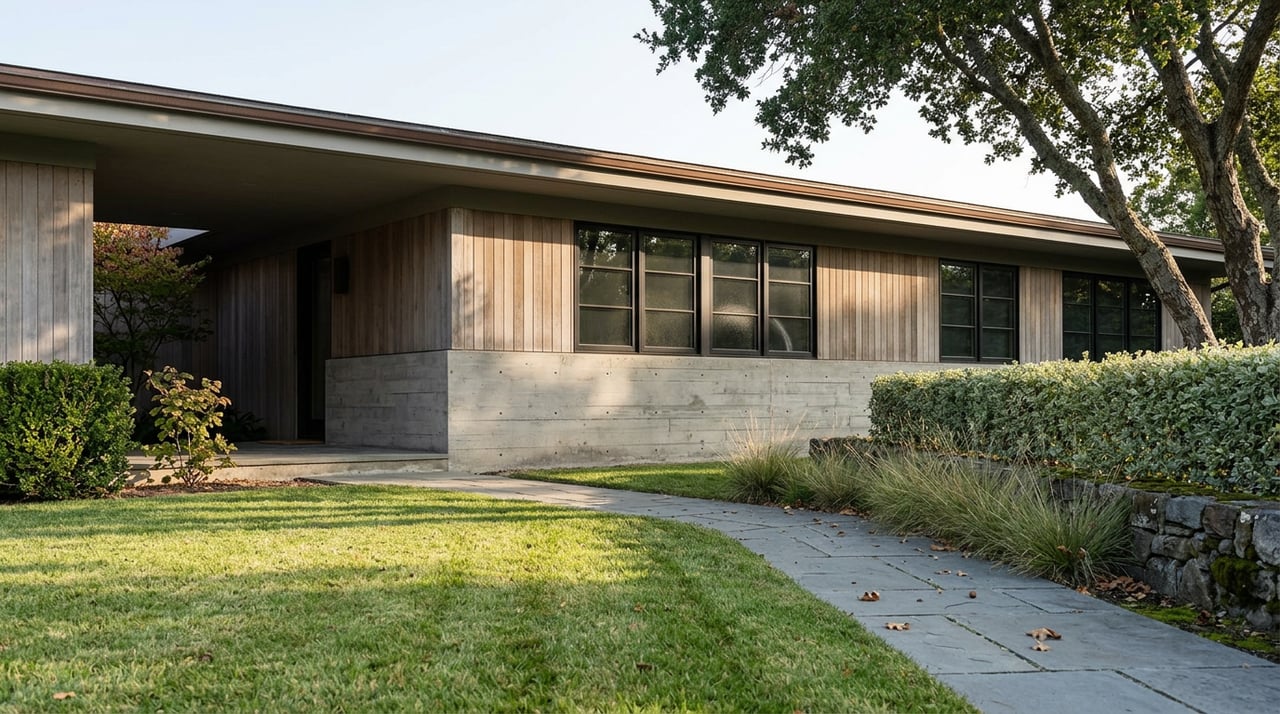
Menlo Park Real Estate Market by Neighborhood: Three Diverging Markets
September 3, 2026
September 3, 2026
A buyer with a $3 million budget toured three Menlo Park listings in the same week this spring. One was a rebuilt ranch west of Alameda de las Pulgas on a 9,000 square foot lot, finished top to bottom within the last five years. One was a 1970s three bedroom in the Willows, original kitchen, freshly painted, priced to move fast. One was a Belle Haven bungalow under 1,500 square feet with real upside if the buyer wanted to gut it. All three were, technically, "Menlo Park at the median." None of them were the same purchase.
That is the problem with quoting a single number for this city. Menlo Park is 6.5 square miles, and inside that footprint the market has split into at least three distinct tiers that are no longer drifting apart slowly. They are pulling apart fast. Separately, two major development projects in town are at different stages.
Start with what a citywide median actually blends together. Over the three months ending May 2026, the West Menlo Park sub-market, the ranch-heavy area west of Alameda de las Pulgas bordering Sharon Heights and the Stanford foothills, posted a median sale price of $4.2 million, up 31.7 percent from the same period a year earlier. Homes there were going pending in about 10 days.
Central Menlo and Stanford Hills trade in that same rarified range, north of $4 million, which means West Menlo is not an outlier so much as the fastest-moving member of the city's top tier. Slide over into Allied Arts and the Willows, though, and the number drops into a $2.5 million to $3.5 million band. This is the part of the city where a buyer can still find a mid-century ranch on a 6,000 to 8,000 square foot lot, or an older Allied Arts cottage that needs work, at a price that would not buy a comparable lot on the west side.
Keep going east, across Highway 101, and Belle Haven sits closer to $1.2 million to $1.3 million, with much of the housing stock built between the 1950s and 1970s and under 1,500 square feet. Homes there have also been taking noticeably longer to sell, closer to 25 to 28 days on market rather than 10.
Put those three numbers next to each other and the citywide median stops looking like a description of the market and starts looking like an average of three different ones:
A gap that size, in a city this small, is not cosmetic.
If you have pulled up Menlo Park's numbers on more than one site this year, you have probably noticed they do not match. One tracker shows the citywide median climbing well past $3 million. Another shows it sliding several percentage points lower over the same stretch. A third lands somewhere in between and calls the market flat.
None of those figures are wrong. They are measuring slightly different things. Some trackers blend condos into the house count. Some use rolling three-month windows, others quarterly. Some weight toward whatever happened to close escrow in a given month, which in a market this thin can be a handful of transactions in one sub-market and none in another. When only a few dozen homes trade in a city each month, which particular homes happen to close can move the citywide number more than any underlying shift in value.
The practical lesson is not to chase the "correct" website. It is to stop shopping the citywide figure entirely and go straight to the sub-market that matches what you are actually trying to buy.
Here is the detail that a straight sales comparison misses. West Menlo's price per square foot has been running around $1,850, a jump of more than 20 percent in a single year. That is not simply land scarcity. A large share of what is trading in West Menlo right now has been recently rebuilt or extensively remodeled, which means a meaningful piece of that number is construction cost, not just dirt.
This matters if you are comparing a listing's price per square foot to a home you saw a year ago, or to a home in the Willows that has never been touched. A rebuilt kitchen, a new foundation, updated systems, and a modern floor plan show up in the comp as dollars per square foot, but they are really dollars spent on labor and materials within the last few years. Two houses on the same size lot in the same sub-market can carry a six figure gap in price that has nothing to do with location and everything to do with what was done to the structure. Before treating any West Menlo comp as a benchmark, it is worth asking when the work was done and by whom, not just what the closed price per square foot happened to be.
Separately, two major development projects at different stages sit on opposite sides of the city.
In Belle Haven, Meta halted its Willow Village project on May 1, 2026. The 59-acre redevelopment of the former Menlo Science and Technology Park had been approved back in December 2022 for 1.6 million square feet of office space, more than 1,700 housing units, and up to 200,000 square feet of retail, including a planned grocery store and pharmacy for a neighborhood that has gone without either. A Belle Haven resident who has lived there for three decades put the daily reality plainly to The Almanac: "We've got one gas station and a couple small restaurants and two bodegas."
The pause does more than delay amenities. Willow Village's planned units accounted for 18 percent of Menlo Park's state-mandated below-market-rate housing requirement and more than the entirety of its market-rate housing target for the current eight-year housing cycle. City planners reviewed the project's compliance in May 2026 and found Meta had met its obligations on paper, but the timeline for construction remains unstated, and the agreement stays in effect only through 2032. For Belle Haven, the project's status and timing leave any effect on the sub-market's price gap with the rest of the city uncertain.
Meanwhile, near downtown, the Parkline redevelopment of the SRI International campus on Ravenswood Avenue cleared City Council approval on September 30, 2025, and is moving forward. The approved plan brings 646 residential units to the site, with a roughly 1.6-acre parcel dedicated to a future 100 percent affordable housing building of up to 154 units, alongside office and research space and new bicycle and pedestrian connections through the Burgess Park area. Lane Partners submitted a Phase 2 proposal in June 2026, meaning the project keeps advancing while Willow Village remains paused across town.
Read together, these two stories provide context alongside the sales data, but their different timelines do not determine Belle Haven's long-term prospects.
If you are cross-shopping Menlo Park against Palo Alto or Redwood City using a single citywide number from either side, you are comparing an average of three sub-markets to an average of however many that city has, and the comparison tells you very little about what you would actually get for your budget.
The more useful exercise is to decide which Menlo Park you are actually shopping before you look at price at all. A rebuilt ranch on a large lot with a short commute to Sand Hill Road and Stanford is a West Menlo or Central Menlo purchase, and the price reflects both the land and the renovation. A move-in-ready or lightly updated home on a smaller in-town lot, closer to Santa Cruz Avenue and the Caltrain station, is more likely an Allied Arts or Willows purchase. An entry point with potential long-term upside is a Belle Haven purchase, though a major project there remains paused. All three are legitimately "Menlo Park." None of them are the same decision.
If Willow Village eventually restarts, would Belle Haven prices catch up quickly? There is no construction timeline on record, and the development agreement runs through 2032 whether or not ground is ever broken. Treat any appreciation tied to that project as a long-horizon bet, not a near-term catalyst.
Does Parkline change anything for homes right around Burgess Park? Phase 2 is still in the proposal stage as of this writing, so the practical effects on foot traffic, parking, and daily convenience near Ravenswood Avenue and Middlefield Road are still a few years out. Worth watching, not yet worth pricing in.
Should I ignore the citywide median altogether? Not ignore it, just stop treating it as a description of any specific home. Use it to spot the trend direction for the city as a whole, then do the real comparison at the sub-market level where the number actually matches a house you would consider buying.
Menlo Park rewards buyers and sellers who know which of its markets they are actually in. If you are trying to figure out where your budget lands, or how a specific property's condition and construction history should factor into what you offer or ask, Bob Kamangar brings decades of Mid-Peninsula pricing and construction experience to exactly this kind of neighborhood-by-neighborhood analysis. Let's Connect.
Stay up to date on the latest real estate trends.
Rooted in trust, expertise, and sincere dedication, Bob brings a lifelong appreciation of what “home” means to every client and every move.