Holbrook-Palmer Park Atherton and What It Says About Town Life
September 10, 2026
September 10, 2026
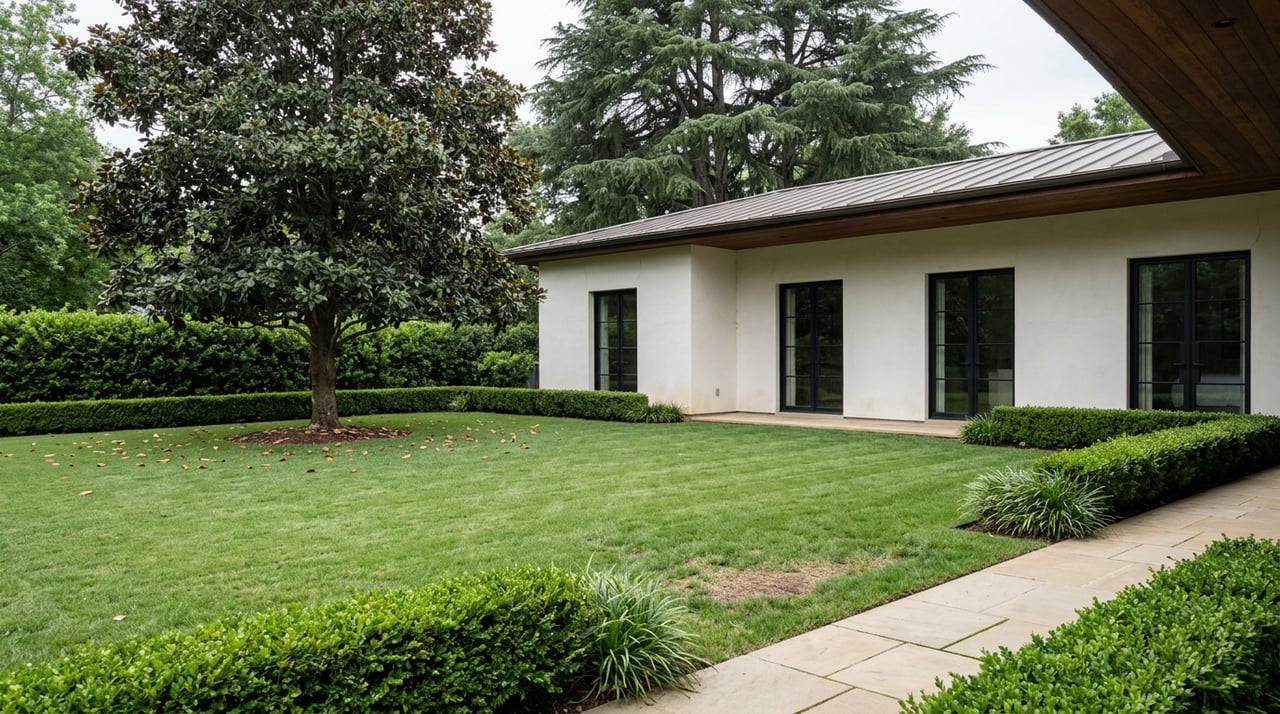
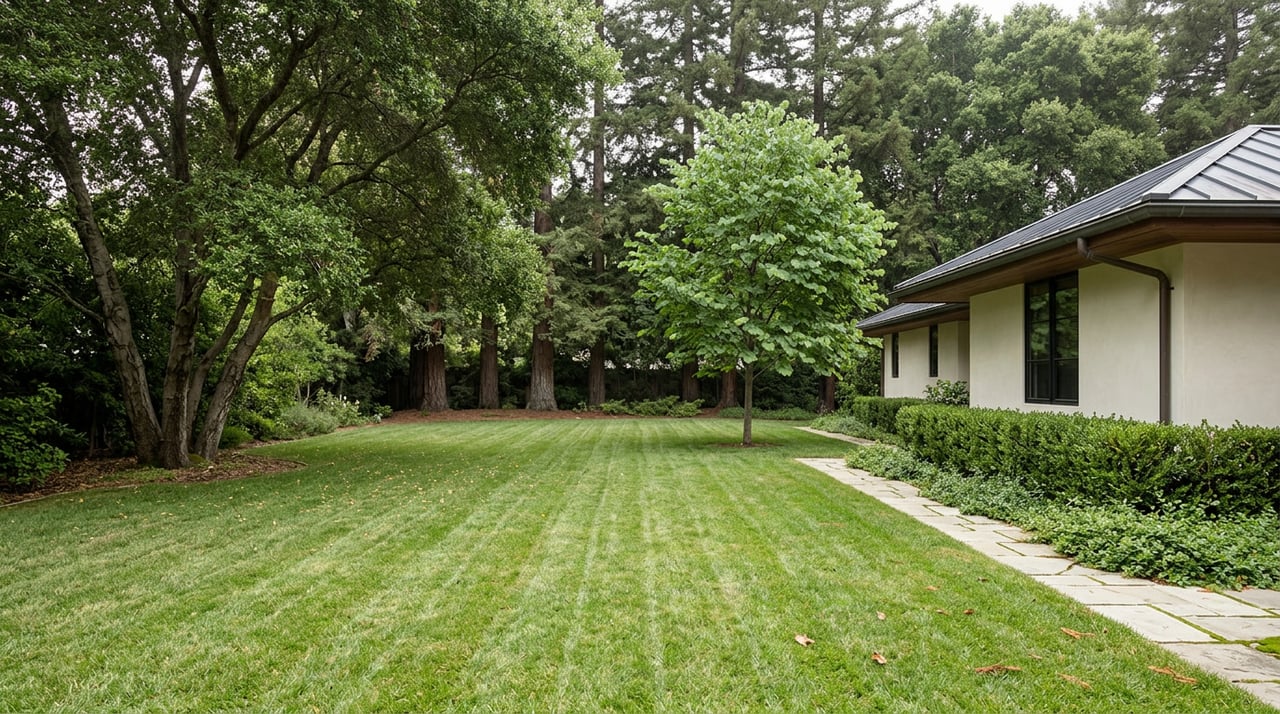
On a weekday morning, Holbrook-Palmer Park looks exactly like what it is: a leashed dog circling the park's paved loop, a father hitting fly balls to nobody in particular on Homer Field, a gardener tending a fig tree that has clearly outgrown anybody's original plan. It is quiet in the specific way a town with no downtown is quiet. There is nowhere else to be.
That will change for exactly two days later this month. On September 26 and 27, a festival that most Atherton residents have never heard of will draw thousands of visitors onto a campus across town from that same park. The contrast between those two facts says more about daily life here than either one does alone.
Atherton's own description of Holbrook-Palmer Park is refreshingly unadorned: it is the town's only recreation site. Not the largest, not the flagship. The only one. Everything that would normally be spread across a commercial strip, a rec center, and a handful of neighborhood parks in a comparable town gets compressed into these 22 acres between Middlefield Road and El Camino Real.
What that compression actually produces is a small collection of very specific things. There is Homer Field at Willie Mays Ball Park, renovated through the effort and donation of the Menlo-Atherton Little League. There is the Event Garden, funded by the Friends of Holbrook Palmer Park, a volunteer group whose fundraising shows up in the landscaping rather than on a plaque. Three historic structures, the Main House, the Jennings Pavilion, and the Carriage House, can be rented for private gatherings, with roughly 130 parking spaces on site and an arrangement for valet overflow at the nearby Civic Center when an event runs larger. The Atherton Tree Committee occasionally leads walking tours through the park's oaks and elms, cataloging trees the way another town might catalog storefronts.
None of this is a criticism of the park. It is a well-kept, quietly funded piece of civic infrastructure. But it means that when residents talk about "what's happening in Atherton," they are almost always talking about this one place, because there is functionally nowhere else for something to happen.
The rules at Holbrook-Palmer read less like a neighborhood park and more like a small, carefully managed venue. Dogs must stay leashed at all times, a rule enforced consistently enough that visitors on review sites still ask where the off-leash area is, only to be told there isn't one. Groups of 13 or more need a day-use permit before they can gather. Professional photography, even a simple portrait session under the roses, requires a permit from the park office. The town's own notice board currently shows the park's playground closed for renovation as of May 4, with no reopening date posted publicly at the time of this writing.
That level of procedure makes sense once you accept the premise: this is not a park among several options. It is the only shared outdoor space the town has, and the town manages it accordingly, closer to how a private venue manages capacity than how a typical municipality manages a park among many.
At 1000 El Camino Real, elsewhere in town, Menlo College hosts something with an entirely different footprint. The South Asian Literature and Art Festival, known as SALA, returns for its seventh year on September 26 and 27, running from 11 a.m. to 7 p.m. both days. This year's theme, "Global Gaze. South Asian Soul," organizes 22 panel discussions across the two days, alongside performances that include the New Delhi-based Anirudh Varma Collective in Florence Moore Auditorium.
The speaker list is not a local lineup. It includes animator and author Sanjay Patel, novelists Karan Mahajan, Aatish Taseer, Manil Suri, and Amitava Kumar, and Nobel Prize-winning scientist Venki Ramakrishnan. Organizers describe SALA as having grown into one of the region's leading celebrations of South Asian literature and the arts, and by this point it draws thousands of attendees from across the Bay Area and beyond, in a single weekend, on a single campus, inside a town that otherwise has one park and no downtown.
If you're planning to go, the practical details are straightforward:
Here is the part that actually explains something about living here. Check the Town of Atherton's own News Flash page this week and you will find a Labor Day closure notice, an open call for two committee seats, a summary of the August Monthly Matters newsletter, a note on rising coyote sightings near open-space corridors, and a report on a recent DUI checkpoint that screened 455 drivers on Middlefield Road. What you will not find, at least as of this writing, is any mention of SALA.
That's not an oversight. It's a structural fact about how information moves in a town built this way. The town's own channels exist to communicate town business: safety, staffing, park closures, the things residents need from their local government. SALA is not town business. It is produced by a private college in partnership with a nonprofit arts organization, and its audience finds out through the festival's own site, ticketing platforms, and press coverage rather than through anything Atherton itself publishes. A resident who only reads the town's alerts will know exactly when the playground reopens and exactly how many drivers were stopped at a checkpoint, and will have no particular reason to know that a Nobel laureate is speaking elsewhere in town.
The park teaches you where the town's attention actually lives: in one place, tightly managed, closely watched. The festival teaches you where it doesn't reach at all. Both are true at the same time, in the same small town, most weeks of the year.
If you're weighing a move to Atherton, or already call it home and want a clearer read on how neighborhoods like this actually function day to day, Bob Kamangar has spent decades paying attention to exactly these details. Reach out anytime to talk about what life here really looks like, park schedule and festival season included.
This article is general information, not legal, tax or financial advice. Consult a qualified professional about your situation.
Stay up to date on the latest real estate trends.
Rooted in trust, expertise, and sincere dedication, Bob brings a lifelong appreciation of what “home” means to every client and every move.